



How Much Do Hipcamp Hosts Earn on a Farm? Real Numbers, a First-Season Calculator and the One Word That Strips Your Legal Protection

During a brutal drought in Queensland, Australia, one dairy family had to sell 40 of their milking cows.
On a dairy, that is not a small decision. Those cows are the business. Every one that leaves on a truck is a milk check that never comes back.
After three months without a milk check, Libby Rough and her family tried something their neighbors probably thought was a little odd. They picked out a few quiet spots beside the Mary River, set up four campsites and listed them as Hidden Pocket on Youcamp, the Australian farm-camping platform that Hipcamp bought in August 2020.
By early 2022, those four campsites had earned more than A$50,000. The money paid for fencing and for repairs to the road the milk tankers use.
Same land. Same family. Same river. Different crop.
Now look at the other side of the coin. In March 2021, a landowner in Big Sur, California listed a stunning 180-acre ridgeline on Hipcamp. On May 5 a neighbor complained. About five days later, county code enforcement ordered the campsite shut down immediately. The citations included no coastal development permit, unpermitted grading and sanitation problems, with one bathroom for a site that could hold up to 100 people.
About two months from listing to locked gate.
Two landowners. Two completely different endings. And the difference had almost nothing to do with how beautiful the land was. It came down to three things: whether the numbers were real, whether the paperwork was done before the first camper arrived, and whether the campsite was set up the way campers (and inspectors) expect.
I host paying visitors on my own durian farm, and I have spent years studying how farms around the world turn spare land into visitor income. Camping is one of the easiest ways in. It is also one of the easiest ways to get hurt if you skip the boring parts.
So in this guide I am going to give you the honest version. What Hipcamp says its hosts earn, and what that really means. Real farms with real numbers. The fees nobody puts on the brochure. A free first-season calculator you can run with your own figures. And the insurance and legal traps that a seasoned insurance adjuster or farm lawyer would warn you about before you take a single booking.

What you will learn in this guide ✅ What Hipcamp hosts actually earn, by type of site, and what "most hosts" really means ✅ Real farm hosts and their numbers, from a two-site Maryland farm to a seven-site Iowa winery ✅ The 15% fee, the taxes and the costs that come out before you see a dollar ✅ A free first-season calculator, plus three worked examples ✅ The one word that can strip away your legal protection ✅ What Hipcamp's $1 million coverage does not cover (tractors and horses are on the list) ✅ How farm campsites get shut down by counties, and how to stay open |
The Short Answer: How Much Do Hipcamp Hosts Earn?
Hipcamp's own host guide says "Most Hosts on Hipcamp earn over $10,000 each year," and that top hosts regularly earn more than $100,000. The same guide says many successful hosts make $20,000 to $50,000 or more in a single summer.
Hipcamp also breaks it down by the kind of property you have:
Type of property | What Hipcamp says hosts earn per year |
A basic rural campsite | $3,000 to $10,000 |
Multiple campsites | $10,000 to $50,000 |
An established property | $50,000 to $100,000+ |
A unique glamping property | $50,000 to $100,000+ |

Now let me read that table the way a banker would, because the details matter.
First, these are Hipcamp's figures, published on Hipcamp's own help pages to recruit hosts. They are not audited. Some older Hipcamp pages put the average active host lower, at $8,000 to $15,000 a year.
Second, the local numbers land in the same neighborhood. In 2022, Hipcamp reported that the average host in San Luis Obispo County, California earned about $10,300 a year. In Mendocino County, where about 70 Hipcamp listings operate, local public radio reported in 2025 that hosts there average roughly $10,000.
Third, and this is the part that trips people up, every one of those figures is gross booking income. It is before Hipcamp's fee, before your toilet bill, before insurance and before tax.
So here is the realistic short answer. A small farm with one or two basic tent sites should think in the low thousands of dollars a year. A farm with several sites, a toilet and a bit of effort can reasonably aim for $10,000 or more. Glamping and cabins can go much higher, but they cost much more to build.
Insight: Ignore the average. Find your type. The difference between a $3,000 host and a $30,000 host is rarely the land. It is the number of sites, whether there is a toilet, whether the host offers extras, and how many nights a year the gate is open. Each of those is a decision you control. The calculator later in this article shows you exactly how much each one is worth. |
Why Campers Are Looking for Your Farm Right Now
Before you spend a dollar, you want to know if the demand is real. It is.
According to The Dyrt's 2026 Camping Report, 82.4 million Americans went camping in 2025, the second-highest year on record, and 2.6 million of them camped for the very first time.
Here is the number that should make every landowner sit up. In 2019, about one camper in ten said they had trouble finding a campsite because campgrounds were full. By 2025, that figure was 52.3 percent. More than half of all campers are struggling to find a place to pitch a tent.

Kampgrounds of America (KOA) tells the same story from a different angle. Its 2026 report found that more than 52 million North American households camped in 2025, and that camping drove $66 billion in spending in local communities. Glamping made up 29 percent of all camping experiences, and 31 percent of new campers chose to glamp.
And campers do not want to drive forever. KOA's 2025 report found that 44 percent of campers were choosing to stay closer to home. That is great news if your farm is within a couple of hours of a town or city.
Where do farms fit in? Hipcamp says about half of its U.S. trips are hosted on working lands: farms, ranches, vineyards and forests. In its 2025 trend forecast, Hipcamp also reported that interest in farm tours was up 49 percent.
Meanwhile, the USDA's 2022 Census of Agriculture counted 28,617 U.S. farms earning a combined $1.26 billion from agritourism and recreational services, up 12.4 percent from 2017 after adjusting for inflation. For the full picture, read my breakdown of the latest agritourism statistics and who is really making the money.
What do campers pay for all this? Here are the average nightly rates from the Outdoor Hospitality Pricing Index published in June 2026.

Two things jump out. Private hosts like you charged an average of $78.59 a night (the median was $55), more than double the $34.12 average at public campgrounds. And glamping averaged nearly $300 a night. Campers will pay for privacy, space and a better experience. That is exactly what a farm can offer.
Real Farms, Real Hipcamp Numbers
Statistics are nice. Stories are better. Here are real farm hosts and what they earned, taken from news reports and Hipcamp's own host spotlights.
Willet Family Farm, Carroll County, Maryland: The First-Season Story
Jeremy Willet started small. One tent site and one glamping site, with the glamping site listed at $149 a night. In his first year on Hipcamp, 2019, more than 200 campers came through.
By 2022, local press reported the farm was earning about $1,000 to $2,000 a month from campers. And the money had a job. Willet told Carroll Magazine the income was "helping us to restore the old barn and fix horse fences."
That is the first lesson. You do not need ten sites to start. Two sites, run well, can put a few thousand dollars toward the repairs your farm has been putting off.
Hickman Family Vineyards, Bangor, California: The Lifeline
In 2020, Alyse Hickman ran three campsites at about $50 a night on her 15-acre vineyard. When the pandemic hit, her overall business fell by about 75 percent. Her Hipcamp income went up by about 50 percent.
She told CNBC, "They're keeping us afloat so I can at least pay my bills."
99 Bottles Winery, Iowa: The Bigger Slice
Mark Newman's winery offered seven campsites, five with RV hookups, at just $25 a night. CNBC reported that camping grew from about 20 percent to about 40 percent of the winery's revenue. Low nightly price, high volume, and a winery right next to the campsites. Campers buy wine.
Live Oaks Farm, Coastal North Carolina: The Mortgage Payer
Patrick and Brittany Brown have seven acres and three campsites. They combine camping with farm-fresh eggs and U-pick flowers, and together those cover their mortgage. As they told Hipcamp in June 2026, "There's no out-of-pocket payments for our mortgage right now."
Smoky Mountain Mangalitsa, Marshall, North Carolina: The Feed Bill
Catherine and Rick Topel raise heritage Mangalitsa pigs. Their first Hipcamp milestone was not a vacation. It was feed. On Hipcamp's host page, they recall that when they made their first $1,000, they spent it on a ton of feed. In a 2025 Reuters story about the farm, the family put the reason so many farmers now host bluntly: "You cannot survive as a family farm only farming."
Farm | Sites | Price per night | Result |
Hidden Pocket (Queensland, Australia) | 4 | Not published | More than A$50,000 from August 2020 to early 2022 |
Willet Family Farm (Maryland) | 2 | $149 for glamping | $1,000 to $2,000 a month (2022) |
Hickman Family Vineyards (California) | 3 | About $50 | Hipcamp income up 50% while the business fell 75% (2020) |
99 Bottles Winery (Iowa) | 7, five with RV hookups | $25 | Camping grew to about 40% of revenue |
Live Oaks Farm (North Carolina) | 3 | Not published | Camping, eggs and flowers cover the mortgage |
Notice the pattern. Small numbers of sites. Simple setups. And almost every one of them sells something extra: wine, eggs, flowers, a farm experience. Hipcamp says 40 percent of its hosts use their income to pay their mortgage or property taxes, and more than 80 percent reinvest earnings back into their land.

The Money Math Hipcamp's Brochure Doesn't Show You
Here is where most new hosts get a nasty surprise. The number on your booking is not the number in your bank account.
Fee No. 1: Hipcamp's Commission
Listing on Hipcamp is free. But when a booking comes in, Hipcamp keeps a commission. As of its August 2025 help page, private landowners in the U.S. pay a 15 percent commission (parks connected to a property management system pay 12.5 percent). Payment processing is included.
That 15 percent is higher than it used to be. Back in 2017 and as recently as 2023, Hipcamp took 10 percent. If you read an older blog post that says "hosts keep 90 percent," it is out of date for U.S. landowners.
Campers also pay their own service fee on top of your price, so remember that the guest sees a higher total than your nightly rate. Extras you sell through Hipcamp, like firewood or eggs, are also subject to the commission. Hipcamp's U.S. help page says hosts keep 85 percent of extras.
Payouts arrive the Tuesday after checkout for U.S. hosts.
Fee No. 2: Lodging and Occupancy Taxes
Most states tax short-term lodging, and campsites are often included. Hipcamp collects and remits these taxes for you only in certain places, including Arkansas, Colorado, Idaho, Kentucky, Maine, Montana, New Hampshire, Utah, Vermont, Washington, Wyoming and parts of California, New York, North Carolina and Oregon. Everywhere else, collecting and filing the tax is your job.
The rules can be surprisingly specific. In Maine, tent and RV site rentals are taxed at 9 percent. In Vermont, the 9 percent rooms tax applies to cabins and pitched tents, but a bare tent or RV site is not taxable. Call your state revenue department before your first booking.
Fee No. 3: Income Tax and Self-Employment Tax
This one catches farmers off guard. Camping income is not farm income. It does not go on Schedule F. Depending on how you run it, it goes on Schedule C (business income) or Schedule E (rental income).
IRS Publication 527 says that if you provide substantial services to guests, such as regular cleaning or changing linens, you report on Schedule C and may owe self-employment tax. The self-employment tax rate is 15.3 percent on net earnings of $400 or more. A glamping tent with fresh sheets every stay looks a lot more like Schedule C than a bare tent pad does. Talk to your tax preparer before your first season, not after it.
The Real Costs of Hosting
Then come your running costs. A standard portable toilet rents for about $100 to $500 a month, and a deluxe unit with twice-weekly service can reach $650. Add trash pickup, toilet paper, firewood, mowing, cleaning and your time.
Here is what $100 of bookings can look like by the time it reaches your pocket.

And here is what it costs to build the sites in the first place, using published price ranges.
Item | Typical cost | Source |
Portable toilet rental | $100 to $500 a month | Fixr, 2025 |
Composting toilet (self-contained) | From about $1,400 | HomeGrail, 2026 |
RV hookup, 30-amp electric | $800 to $1,200 | RVshare, 2026 |
RV hookup, 50-amp electric | $1,200 to $2,000 | RVshare, 2026 |
RV full hookup (power, water, sewer) | $3,000 to $5,000 | RVshare, 2026 |
Canvas bell tent | $450 to $2,550 | White Duck Outdoors, 2026 |
Glamping deck or platform | $500 to $2,000 per unit | White Duck Outdoors, 2026 |
Glamping furnishings | $800 to $2,500 per unit | White Duck Outdoors, 2026 |
Is the extra spending worth it? Often, yes. Full RV hookups earn about 57 percent more per night than dry camping, roughly $25.58 extra a night, according to an April 2026 industry analysis. For a full line-by-line budget, read how much it costs to set up a camping site on your farm.

The First-Season Hipcamp Calculator
Now let's run your numbers. Change the boxes below to match your farm. Start with honest, even pessimistic, guesses. A new listing with zero reviews will not fill up like an established one.
If the calculator does not load on your device, here is the same math on paper. Every first-season estimate comes down to six lines.

The single most important number is occupancy: the share of your open nights that actually get booked. Most new hosts guess far too high. Remember, a site that is open 180 nights and booked on 45 of them has 25 percent occupancy. That might mean almost every weekend full in summer and quiet weekdays.
Two Hipcamp facts help here. Hipcamp says 57 percent of its bookings are midweek or off-peak, so weekday discounts can lift occupancy. And 98 percent of bookings come from first-time guests, which means you are winning new campers through search, photos and reviews, not relying on regulars yet.
Three Worked Examples
Here are three example farms, each open 180 nights in their first season. All costs are example inputs, not quotes. Plug in your own.
The Starter Pitch | The Farm Campground | The Glamping Upgrade | |
Sites | 2 tent sites | 4 tent + 2 RV sites | 2 bell tents on decks |
Price per night | $35 | $40 tent, $65 RV | $150 |
Occupancy | 25% | 30% | 35% |
Booked site-nights | 90 | 324 | 126 |
Gross bookings (incl. extras) | $3,600 | $17,604 | $20,790 |
Hipcamp 15% | -$540 | -$2,641 | -$3,119 |
Per-night costs | -$540 | -$2,592 | -$3,780 |
Season costs (toilets, insurance, misc.) | -$1,400 | -$4,600 | -$4,600 |
Net before income tax | $1,120 | $7,771 | $9,292 |
Startup cost (example) | $1,500 | $5,000 | $11,400 |
Break-even occupancy | About 14% | About 11% | About 12% |

Look closely at the Starter Pitch. Two tent sites at a quarter occupancy gross $3,600, which matches the low end of Hipcamp's own range. But after the fee, the toilet and insurance, only about $1,100 is left. That is still worth having if your fixed costs are small, for example if you already have a toilet guests can use and your insurer adds camping to your existing policy.
Now look at the Farm Campground. Six sites, a mix of tents and RVs, and the net jumps to nearly $7,800. The fixed costs barely changed, but they are now spread over far more bookings. That is the hidden power of adding sites. One warning, though: in several states six sites is enough to require a campground license. More on that below.
Field-Tested Play: Try This on Your Farm Run the calculator three times. Once at 10% occupancy, once at 25% and once at 40%. If the 10% version loses more money than you can comfortably afford, start smaller or cut your fixed costs before you build. If the 25% version makes you smile, you have a business worth testing. Never build for the 40% version in year one. |
Want to charge more without scaring campers away? Read why most farm stays are undercharging and the simple pricing formula that fixes it.
The One Word That Strips Your Legal Protection
Now the part that most Hipcamp articles skip. If you remember only one section of this guide, make it this one.
The word is "fee."
Every one of the 50 states has a recreational use statute. These laws encourage landowners to open land to the public by limiting their liability when people use it for recreation, including camping. On paper, that sounds perfect.
Here is the catch. In most states, the protection disappears when you charge people to use your land. Pennsylvania's law does not limit liability where the owner charges people to enter or use the land. Georgia's law removes protection on a date when the owner charges the person who was hurt. In Ohio, someone who pays a fee (other than a lease payment) is not a "recreational user" under the statute at all.
See what happened there? The moment a camper pays you through Hipcamp, your farm may step outside the very law that protects free recreational use.
A 2026 Ohio case shows the difference. In Hug v. Hake, a guest broke a vertebra in a UTV rollover on a Williams County farm. The landowners were found immune under Ohio's recreational user statute, because no fee had been paid. Charge that same guest $40 for a campsite, and the analysis may look very different.
There are a few exceptions. Wisconsin only removes protection if the owner's income from the property for recreation exceeds $2,000 in a year. Texas keeps protection for owners whose charges stay under 20 times the previous year's property taxes, or who carry the insurance the statute requires. But do not assume your state is one of the generous ones. Ask a lawyer.
Does Your State's Agritourism Law Cover Camping?
Many farmers then assume their state's agritourism liability act will protect them instead. More than 30 states have one, and recent counts put the number at roughly 35 to 40. Most require warning signs with exact wording, and several (including Tennessee, Virginia, Washington, Vermont, Ohio and Wisconsin) require black letters at least one inch tall.
But read the definitions. Pennsylvania's agritourism law, passed in 2021, does not protect injuries arising from overnight accommodation. Vermont's definition of agritourism does not include lodging at a farm. Washington, on the other hand, lists camping as an agritourism activity. Same idea, completely different coverage.
And placement matters. In a March 2026 Virginia ruling, a farm with only two signs (one at the entrance and one in the gift shop) lost its protection because there was no sign at each activity. As one University of Minnesota Extension educator put it, these laws are "a defense in court, not full immunity." None of them protect you from your own negligence.
Before you post a single sign, read agritourism laws by state and where to post your agritourism warning signs.
What About a Waiver?
Waivers help in many states, but not everywhere. Courts in Louisiana and Virginia generally refuse to enforce pre-injury releases, and Oregon's Supreme Court threw out a ski area's release in 2014. New York law voids negligence waivers at paid places of recreation. A waiver is one layer of protection, never the whole wall. Here is my full guide on whether liability waivers protect your farm.
Hipcamp's $1 Million Coverage: What It Covers and What It Doesn't
Hipcamp includes liability coverage for hosts at no extra charge. In the U.S., it covers up to $1 million per occurrence and $5 million in aggregate. That is genuinely valuable. But an experienced insurance adjuster would want you to read four details before you rely on it.
1. It sits behind your own policy. Hipcamp's help page states, "This policy would be in excess to your homeowner's insurance." In plain English, your own insurance is expected to respond first. Hipcamp's coverage acts as primary only if you have no homeowner's policy at all.
2. It only covers Hipcamp bookings. A camper who books directly with you, or through another platform, is not covered by it.
3. Not everyone qualifies. Hosts with a felony conviction, or with a homeowner's or renter's liability claim in the past three years, are not eligible.
4. The exclusions read like a list of farm activities. Hipcamp's liability coverage excludes, among other things:
Serving alcohol
Vehicles, and tractors and other mobile equipment
Horseback riding
Animals outside a listed set, and dogs with a bite history
Weapons and hunting
Paid boat rentals and racing
Read that list again as a farmer. A tractor-pulled hayride for your campers? Excluded. Pony rides for the kids? Excluded. A glass of your own wine at the campfire? Excluded. These are exactly the extras that make a farm stay special, and exactly the ones you must insure some other way.
Hipcamp also offers a Property Protection Plan for damage campers cause, up to $10,000. Hipcamp is clear that it is not an insurance policy. You must report damage within 14 days of checkout, and it excludes damage to animals, trees, lawns and plants, as well as lost income.
Why Your Farm Policy May Not Pay Either
Most farm and homeowner policies have a "business pursuits" exclusion. Ohio State University's farm office lists agritourism and income-producing recreation as activities not covered by a farm policy without an endorsement. Virginia Farm Bureau Mutual says such activities must either be endorsed onto the policy or covered by a separate liability policy.
What does that cost? There is no national price list. The best public clue comes from Illinois, which offers a tax credit for agritourism liability insurance. In 2023, the 84 operations that applied paid $364,398 in total liability premiums, about $4,300 each, and an average of $1,831 per operation was certified as covering their agritourism activities. Your number could be higher or lower, so get a real quote. If your insurer says no, read what to do when you can't find agritourism insurance.
The Risk Nobody Thinks About: Trees
Ask anyone who has camped for decades what keeps them up at night, and it is not bears. It is a dead limb overhead.
In July 2008, a red oak fell on a tent at a resort campground in Colona, Illinois, killing a four-year-old and a nine-month-old. The lawsuit claimed the campground had no tree inspection program. It settled for $1.25 million. At a public campground in San Mateo County, California, a rotten 72-foot tanoak fell on a tent in 2012 and badly injured 12-year-old Zachary Rowe. That case settled in 2018 for $47.5 million.
Before you mark a single tent pad, walk every site and look up. Remove dead branches, and never put a tent under a dead or leaning tree.

Reality Check: 6 questions to ask your insurance agent 1. Does my farm policy cover paying overnight guests, or is camping excluded as a business pursuit? 2. If I add an endorsement, does it cover campfires, tractor rides, animals and alcohol? 3. Will my policy respond first, before Hipcamp's excess coverage? 4. Am I covered for guests who book directly, not through Hipcamp? 5. Should my camping business be in an LLC, and does the policy name it? 6. What safety steps (tree inspections, fire rings, signage) do you require? |
Mississippi State University Extension suggests farms adding agritourism consider an LLC because of the added liability risks, and in one Illinois survey, 79 percent of agritourism operators used an LLC or similar entity. For the full insurance picture, read agritourism insurance: what it covers, what it costs and how to get quotes.
Permits and Neighbors: How Farm Campsites Get Shut Down
Remember the Big Sur ridgeline? It was not shut down by Hipcamp. It was shut down by the county, after a neighbor called.

That story is not unusual. In March 2023, the planning commission in Twentynine Palms, California suspended two owners' vacation rental permits for three months over Hipcamp listings, and one owner was ordered to attend a "Good Neighbor" class. In Mendocino County, a local fire chief has spoken publicly about numerous incidents and complaints at Hipcamp sites over five years.
The problem is usually one of two things: state campground licensing, or county zoning.
State Campground Licensing: How Many Sites Is Too Many?
Many states treat you as a licensed campground once you pass a certain number of sites, and the threshold can be lower than you think.
State | When a license or permit is required | Who regulates it |
California | 2 or more tent or RV lots for rent (special occupancy park) | Housing and Community Development |
Wisconsin | 4 or more sites, or 1 to 3 sites if advertised | DATCP and agent counties |
Michigan | 5 or more campsites (construction permit $965, yearly license $119) | EGLE and local health department |
New York | 5 or more campsites | State or county health department |
Ohio | 5 or more portable camping units | Local board of health |
Pennsylvania | No minimum number of sites | Department of Health rules |
Look at Wisconsin. One to three sites need a license if advertised, and a Hipcamp listing is advertising. Look at California. Just two sites can make you a special occupancy park. There is some good news there, though. California's AB 518, signed in October 2025, lets counties that opt in allow "low-impact camping areas" of up to nine accommodations on parcels of at least two acres, with sites kept 200 feet from neighbors' homes.
County Zoning: The Six-Month Rule
Even if your state is relaxed, your county may not be. Chaffee County, Colorado, for example, adopted a camping rule in 2023 that requires at least five acres and caps the number of sites, up to five on parcels under 100 acres. Oregon State University Extension advises farmers to allow at least six months for the county planning process.
Field-Tested Play: Make two phone calls before you list Call your county planning office and ask: "I want to host campers on my farm through Hipcamp. How many sites can I have, and what permit do I need?" Then call your county or state health department and ask the same question about toilets and drinking water. Write down the name of everyone you speak to. Ten minutes on the phone can save you a shutdown order. |
And talk to your neighbors before they talk to the county. Tell them where the sites are, when quiet hours start and how to reach you. Most complaints start as surprises. If weddings are also on your list, read farm wedding venue zoning for the same lesson on a bigger scale.
The Camping Details That Decide Your Reviews
Your reviews are your marketing. On Hipcamp, a handful of practical details decide whether campers rave or grumble.
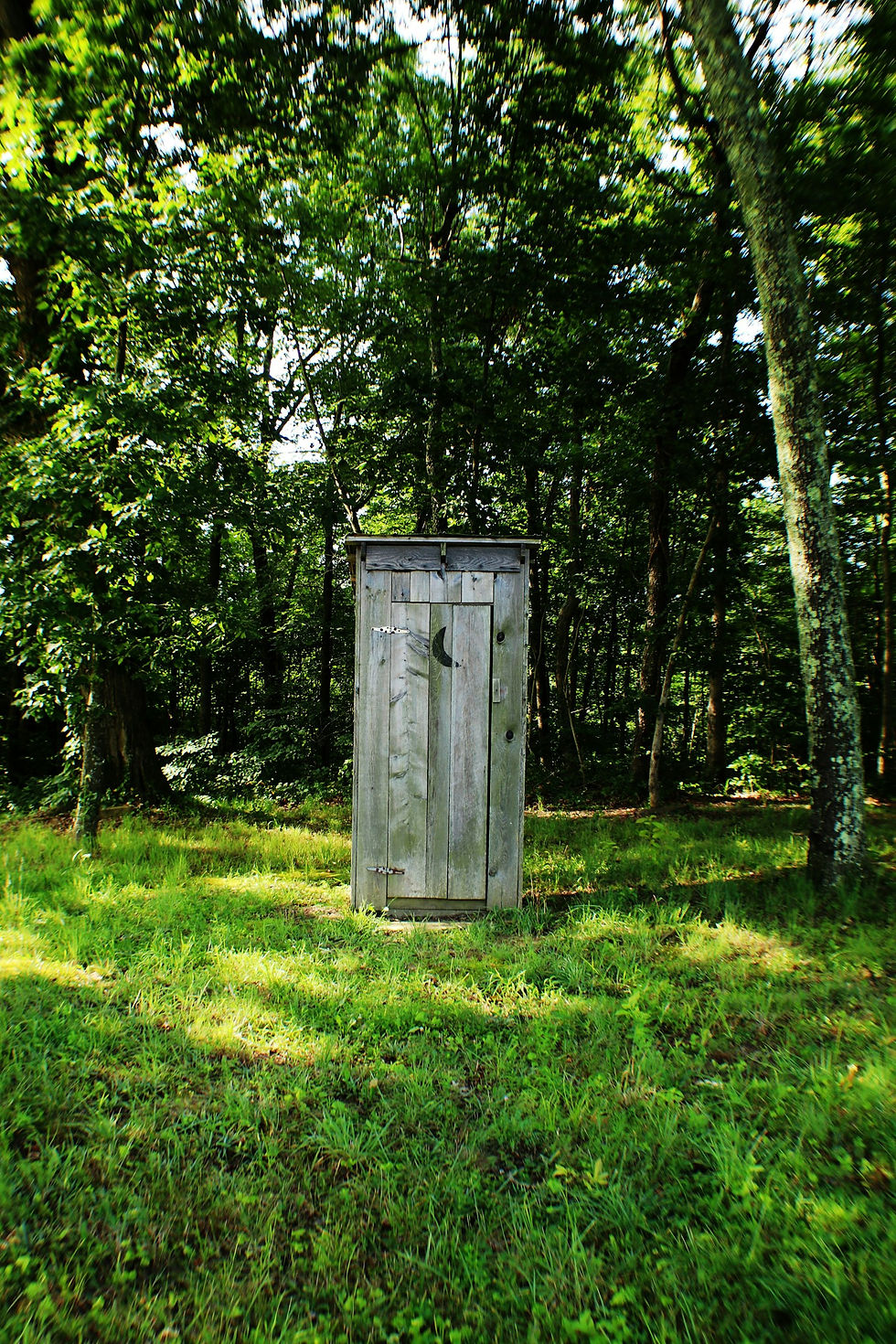
Toilets Double Your Bookings
Hipcamp says listings with toilets receive about twice as many bookings, and toilets are the second most used search filter. If you do nothing else on this list, provide a clean toilet.
How many? State codes give you a useful yardstick. Michigan's rules for primitive campgrounds call for one privy per sex and one water outlet for every 25 sites, and a single unisex privy is acceptable for 10 sites or fewer. New York requires toilets within 500 feet of each campsite and drinking water within 250 feet.
Fire Rings Belong in the Right Place
Campfires are half the reason people camp. Smokey Bear's guidance says to clear a circle at least 10 feet across around the fire, keep the fire at least 15 feet from tents and vegetation, and make sure overhanging branches are well above the flames. The National Fire Protection Association recommends keeping fires 25 feet from structures. Build permanent fire rings in safe spots, and you control where every fire happens. Post your burn-ban policy in the listing.

Small Touches Campers Search For
Pets. In Hipcamp's 2022 summer survey of 25,000 campers, "pet friendly" was the No. 1 search filter.
Wi-Fi. Hipcamp reported in November 2025 that searches for Wi-Fi were up 60 percent. Even a weak signal at the farmhouse is worth mentioning.
Flat, mown pads. Mark each site clearly, with a picnic table and enough space between neighbors.
Weather plans. Hipcamp says weather caused up to 40 percent of cancellations. Choose your cancellation policy carefully. Hipcamp offers nine options, from Super Flexible to Super Strict.
Sell the Farm, Not Just the Grass
The farms that earn the most sell an experience. Farm-fresh eggs are the most popular add-on on Hipcamp, and interest in farm tours is growing fast. Firewood bundles, a walk with the farmer, a basket of produce or a sunrise milking can all lift your average booking.
Just remember the insurance list above, and check your state's food rules before you sell anything homemade. Here is my guide to selling food on your farm without trouble from the health inspector, and my list of upsells that double your agritourism revenue without more visitors.
Aim for Hipcamp's Star Host badge too. You need a recommendation rate of 95 percent or higher, at least five bookings in the past year, a 100 percent response rate, and either Instant Book or replies within six hours. Read how reviews turn small farms into tourist destinations.

Hipcamp vs Harvest Hosts vs Airbnb
Hipcamp is not the only door. Here is how the main options compare for a farm.
Platform | How you earn | Best for |
Hipcamp | You set a nightly price; Hipcamp keeps 15% from private landowners | Tent sites, RV sites and glamping on private land |
Harvest Hosts | Members stay free; you keep 100% of what they spend on your products | Farms with a farm shop, winery or products to sell to RV travelers |
Airbnb | Nightly price with Airbnb's fees | Cabins, tiny homes and farm stays with a real bed |
Harvest Hosts says it has more than 400,000 members and about 2,400 farm hosts. If you already sell wine, cheese or produce, it can be a good partner to Hipcamp rather than a replacement. For the Airbnb side, compare farm stays vs Airbnb and see whether you qualify for Airbnb's Farm to Stay grant.
Your First-Season Launch Plan
Here is the order I would do things in, so you never pay to build something you are not allowed to run.
Field-Tested Play: The 6-week launch Week 1: Call your county planning office, health department and insurance agent. Get answers in writing. Week 2: Run the calculator at 10%, 25% and 40% occupancy. Decide on the number of sites. Week 3: Prepare the sites. Mow pads, check every tree overhead, set fire rings 15 feet from tent pads, arrange a toilet and water. Week 4: Post any required warning signs, prepare your waiver if your state enforces them, and register for lodging taxes. Week 5: Create the listing. Take photos at golden hour, describe the farm experience, price on the low side, and turn on Instant Book. Week 6: Welcome your first campers, ask every happy guest for a review, and keep a simple log of bookings and costs for your tax preparer. |
Frequently Asked Questions About Hipcamp Host Earnings
How much do Hipcamp hosts make a year?
Hipcamp says most of its hosts earn over $10,000 a year and top hosts earn over $100,000. By property type, it estimates $3,000 to $10,000 for a basic rural campsite and $10,000 to $50,000 for multiple campsites. These are gross figures before fees, costs and tax.
How much does Hipcamp take from hosts?
As of August 2025, Hipcamp charges private U.S. landowners a 15 percent commission on bookings, with payment processing included. Campers pay a separate service fee. Earlier, Hipcamp's commission was 10 percent.
How much should I charge for a campsite on my farm?
Hipcamp suggests roughly $20 to $40 a night for tent sites, $30 to $75 or more for RV sites and $100 to $300 or more for glamping. A June 2026 pricing index found private hosts averaged $78.59 a night. Start on the lower side until you have reviews.
Does Hipcamp insurance cover my farm?
Hipcamp provides up to $1 million per occurrence in liability coverage in the U.S., but it sits in excess of your homeowner's policy, applies only to Hipcamp bookings and excludes activities such as tractor rides, horseback riding, alcohol and hunting. Talk to your own insurer as well.
Do I need a permit to host campers on my farm?
Often, yes. Many states require a campground license above a set number of sites, such as five or more in Michigan, New York and Ohio, four or more in Wisconsin and two or more in California. Your county may also require a zoning permit. Call both before you list.
Is Hipcamp income farm income for taxes?
No. Campsite income is generally reported on Schedule C or Schedule E, not Schedule F. If you provide substantial services, it usually goes on Schedule C and may be subject to self-employment tax. Ask a tax professional.
How many campsites do I need to make $10,000 on Hipcamp?
At $40 a night with about 30 percent occupancy over a 180-night season, you would need around five sites to gross $10,000. Use the calculator in this article to test your own price, season and occupancy.
Your Next Step: Find Out If Your Farm Is Ready for Campers
Here is the truth. The farms that make money from campers are not the ones with the prettiest views. They are the ones that did the math, made the phone calls and set up the basics before the first booking.
You now have the numbers. The question is whether your farm is ready.
That is exactly why I built the Farm Readiness Quiz. In a few minutes it shows you which parts of your farm are ready for visitors and which ones to fix first, so you don't spend money building the wrong thing.
Then download my free ebook, the 21-Point Agritourism Blueprint. It walks you through 21 points to check before you welcome your first paying visitor, from insurance and signage to pricing, so you open your gate with confidence instead of guesswork.
P.S. Before you build a single site, make the two phone calls in this article: one to your county, one to your insurance agent. The Big Sur landowner was shut down within about two months because the neighbor called the county first. Make sure yours come first.
Written by Stephen Loke of AgritourismSuccess.com, whose farm is featured in Bloomberg News and Asahi Shimbun. This article is for education only and is not legal, tax, insurance or financial advice. Laws, fees and prices change, so confirm details with your own professionals. Figures were checked in October 2026. Calculator results are estimates based on your inputs. Photos from Unsplash.
Sources
Hipcamp: Is the Host Protection Insurance primary or secondary?
Business Wire: Hipcamp San Luis Obispo County host earnings (2022)
Business Wire: Hipcamp amenity and Wi-Fi search trends (2025)
UC Agriculture and Natural Resources: Hipcamp and farm hosts
Insurance Journal / Reuters: Farmers turn to agritourism (2025)
ABC Rural via inkl: Farms are offering a new kind of camping (2022)
Monterey County Weekly: Big Sur landowner cited after county shuts down camping spot (2021)
Z107.7 FM: Twentynine Palms permit suspensions over Hipcamp listings (2023)
Modern Campground: Full hookups earn more than dry camping (2026)
USDA ERS: Agritourism income in the 2022 Census of Agriculture
Morning Ag Clips / Ohio State: When is an Ohio landowner liable to recreational users? (2026)
National Agricultural Law Center: Pennsylvania agritourism statute
Oklahoma Farm Report: Signage requirements under agritourism liability acts (2026)
University of Minnesota Extension: Understanding agritourism liability (2025)
Ohio State University Farm Office: Farm insurance and unique activities (2023)
Virginia Farm Bureau: Protect agritourism ventures with proper liability coverage
University of Illinois: Agritourism liability exemptions, Illinois case study (2025)
Mississippi State University Extension: Insurance information for agritourism businesses
NBC Bay Area: $47.5M settlement in fallen tree lawsuit (2018)
Oregon State University Extension: Adding agritourism, working with your county
Maine Revenue Services: Bulletin 32, rental of living quarters (2026)
Farmers.gov / Rural Tax Education: Tax considerations for agritourism
White Duck Outdoors: How many bell tents to open a glampsite (2026)


Comments