



Agritourism Laws by State: The One-Inch Mistake That Can Wipe Out Your Liability Protection (50-State Guide to Warning Signs, Registration and Liability Acts)


Last reviewed: October 2026. Covers all 50 states.
In 2026, a Virginia judge looked at a farm park that had done what most operators think the law asks. It had a liability warning sign. The sign was posted at the entrance. A visitor hurt her hand on a slide, the park raised Virginia's agritourism law as its shield, and the court said no. According to the account published by agricultural law professors Jesse Richardson and Tiffany Dowell Lashmet, the judge held that one sign at the gate was not enough, because Virginia's statute calls for a sign at the entrance and at the site of the activity.
One missing sign. That was the whole difference between protected and exposed.
I have spent years telling farmers that agritourism is the best-paying crop they will ever plant. I still believe it. But most farmers who open their gates to the public believe something about the law that is flatly wrong: "My state has an agritourism law, so I'm covered."
You are not covered because a law exists. You are covered only if you have done the specific things the law demands, in the specific way it demands them. In some states that means exact wording in black letters one inch high. In others it means registering with a state office before anyone sets foot on your land. In thirteen states it means nothing at all, because there is no agritourism liability law to hide behind.
This guide walks through every state, one at a time, in plain English. Find yours, check it against what is on your fence post today, and fix the gap before the season starts.
The Short Answer: Which States Have Agritourism Liability Laws?

By our count, as of October 2026, 37 states have a statute that limits a farm's liability for agritourism injuries. 13 states do not.
States with a liability law (37): Alabama, Alaska, Arkansas, Colorado, Connecticut, Florida, Georgia, Idaho, Indiana, Iowa, Kansas, Kentucky, Louisiana, Maine, Minnesota, Mississippi, Missouri, Montana, Nebraska, New York, North Carolina, North Dakota, Ohio, Oklahoma, Oregon, Pennsylvania, South Carolina, South Dakota, Tennessee, Texas, Utah, Vermont, Virginia, Washington, West Virginia, Wisconsin and Wyoming.
States without one (13): Arizona, California, Delaware, Hawaii, Illinois, Maryland, Massachusetts, Michigan, Nevada, New Hampshire, New Jersey, New Mexico and Rhode Island.
Kansas went first in 2004. By January 2019 the count stood at 31, according to a National Agricultural Law Center factsheet by Peggy Kirk Hall and Evin Bachelor of Ohio State University. Since then Iowa, Pennsylvania and Vermont (all 2021), South Dakota (2022), Connecticut and Wyoming (both 2025) have joined the list.
Three of those 37 (Alaska, Montana and Wyoming) fold agritourism into a general recreation law instead of a stand-alone act, and they work differently. More on that below.
What an Agritourism Liability Law Actually Does

Every one of these laws is built on the same idea. A working farm has dangers nobody can remove: uneven ground, animals with minds of their own, machinery, weather, and visitors who ignore instructions. The law calls these inherent risks. If a visitor is hurt by an inherent risk, the farm is not liable.
That is the entire promise. Here is what the promise does not include.
It does not stop anyone from suing you. It gives you a defense to raise in court. You still need a lawyer, and you still need insurance to pay that lawyer.
It does not cover your own carelessness in many states. In Idaho, Kentucky, Maine, Minnesota, Oklahoma, Oregon, Vermont and Virginia, ordinary negligence by the operator takes the protection away. Missouri says much the same in different words.
It does not cover dangers you knew about and kept quiet. Nearly every statute removes protection when the operator knew of a dangerous condition, or a dangerous animal, and did not warn the visitor.
It does not apply automatically. Most states make you earn it with a sign, a contract clause, a registration, or all three.
Think of the statute as a seat belt. It works well when it is buckled. It does nothing hanging loose by the door.
Why This Matters More Every Year
Agritourism is no longer a sideline. The USDA's 2022 Census of Agriculture counted 28,617 farms with agritourism and recreational income totalling $1.26 billion, about $44,000 per farm. The USDA Economic Research Service puts the growth since 2017 at 12.4 percent after inflation.
More visitors means more chances for something to go wrong. The numbers are sobering.
The CDC's Animal Contact Outbreak Surveillance System recorded 557 outbreaks of intestinal illness linked to animal contact from 2009 to 2021, with 14,377 illnesses, 2,656 hospitalizations and 22 deaths. Farms and dairies accounted for 89 of the single-location outbreaks, fairs and festivals for 36, and petting zoos for 28.
The National Children's Center for Rural and Agricultural Health and Safety estimates that 3,735 visiting youth were injured on U.S. farms in 2014, and that animals were the leading source of injury for children who were not working.
In 2017 a Minnesota jury found a pumpkin farm negligent after a 7-year-old contracted E. coli at its petting zoo, and assessed damages at $7.55 million. The case is summarized in Hall and Essman's review of agritourism litigation for the National Agricultural Law Center.
One bad afternoon can cost more than a decade of gate receipts. If you want the income side of the picture, I laid out the real figures in Is Agritourism Profitable? Real Numbers From U.S. Farms. This article is about keeping what you earn.
The Five Conditions That Decide Whether You Are Protected
Read your state's statute with these five questions in hand.
1. Is a Warning Sign Required?
In most states, yes, and the statute says so bluntly. Florida, Idaho, Mississippi, North Carolina, Ohio, Oklahoma and several others state that failing to post the sign prevents you from claiming the immunity at all.
2. What Must the Sign Say, and How Big?
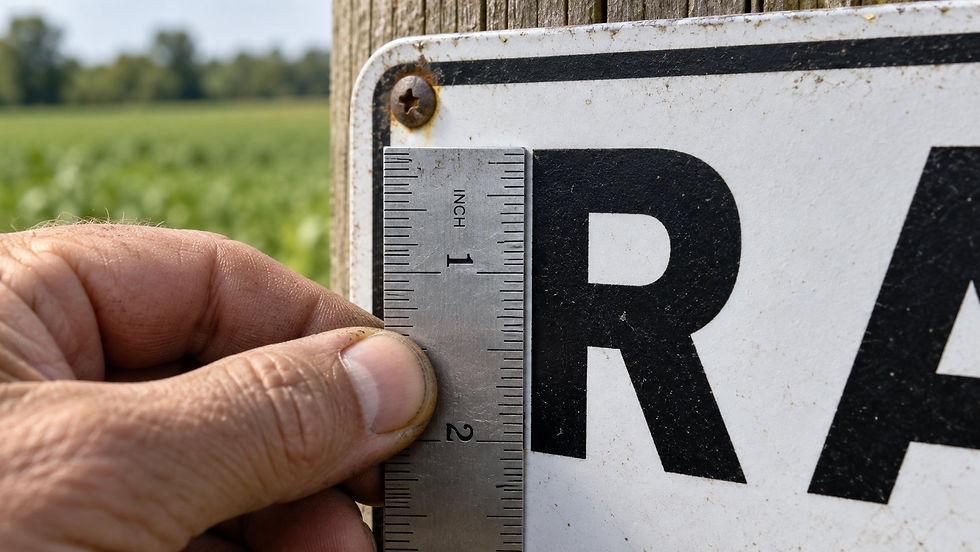
Thirty states prescribe the wording word for word. The most common specification is black letters at least one inch high. That is the rule in Alabama, Arkansas, Colorado, Florida, Georgia, Idaho, Indiana, Iowa, Kansas, Kentucky, Louisiana, Maine, Missouri, Mississippi, Ohio, Oklahoma, Oregon, Tennessee, Utah, Vermont, Virginia, Washington and Wisconsin.
The exceptions will catch you out. North Carolina's current code says three-quarters of an inch. Utah and Wisconsin require a white background. Pennsylvania specifies the size of the whole sign, at least 3 feet by 2 feet. Minnesota, New York, North Dakota, South Dakota and Texas set no letter height.
Do not paraphrase. Do not improve the wording. Copy it from the statute, character for character.
3. Where Must the Sign Go?

This is the trap that caught the Virginia park. States fall into three camps.
Entrance and at the site of each activity: Florida, Idaho, Kentucky, Louisiana, North Carolina, Oklahoma, Oregon, Tennessee, Virginia, Washington and West Virginia.
Entrance or activity site (either one): Ohio, Pennsylvania, South Carolina, Utah and Wisconsin.
Entrance only, or "at or near" the location: Alabama, Arkansas, Georgia, Indiana, Iowa, Kansas, Mississippi, Missouri, Nebraska, South Dakota and Vermont.
If you run a corn maze, a hayride and a petting pen in an "entrance and activity" state, you need a sign at the gate and one at each of the three.
4. Must the Warning Appear in Your Contracts?
Many states require the same warning in every written contract with a visitor: Arkansas, Florida, Idaho, Iowa, Kansas, Kentucky, Louisiana, Mississippi, Missouri, North Carolina, North Dakota, Oklahoma, Oregon, South Carolina, South Dakota, Tennessee, Vermont, Virginia, Washington and West Virginia. That includes booking forms, rental agreements and school-group paperwork. Iowa and South Carolina want it in 12-point bold type.
A few states let you choose between a sign and a signed document: Colorado, Indiana, Kentucky, Maine, Nebraska and Texas. Georgia and Pennsylvania go the other way and demand both.
5. Do You Have to Register First?

In six states the protection belongs only to operators who have signed up with the state.
Kansas: register with Kansas Tourism at the Department of Commerce. Free, valid five years.
Missouri: the law protects a "registered agritourism operator," defined as a member of the AgriMissouri program, now run as Missouri Grown. Membership is listed at $50 a year.
Mississippi: register each year with the Department of Agriculture and Commerce, $50.
North Dakota: register with the state Division of Tourism. Free, valid five years.
Oklahoma: the activity must be registered with the Department of Agriculture, Food and Forestry.
Louisiana: you need a written plan of operation approved through the LSU AgCenter, good for five years.
An unregistered Kansas farm with a perfect sign has a perfect sign and no statutory protection.
Six Mistakes That Quietly Void Your Protection
After reading all 37 statutes side by side, the same six failures keep turning up. None of them involves a reckless farmer. All of them involve a detail.
Buying a generic sign. A sign that says "Enter at your own risk" is not the statutory warning. If your state prescribes the words, a near miss is a miss.
Posting one sign when the law asks for two. Eleven states want a sign at the entrance and at the activity itself.
Letting the sign fade, fall or disappear behind the pumpkins. Most statutes say "post and maintain." A sign nobody can find is a sign you cannot prove.
Forgetting the paperwork. Twenty states want the warning in your written contracts too. An online booking form with no warning is a gap.
Skipping registration, or letting it lapse. In Kansas and North Dakota it is free and lasts five years. In Missouri and Mississippi it renews every year. Put the date in your calendar.
Adding activities the statute never covered. Pennsylvania excludes weddings, concerts and overnight stays. Vermont excludes lodging. Louisiana covers only activities on its official list. When you add a new attraction, check that the law comes with it.
Every one of these can be fixed in an afternoon for less than the cost of a tank of diesel. Left alone, any one of them can hand a plaintiff's lawyer the argument that your state's law does not apply to you.
Agritourism Laws by State: All 50, A to Z
Each entry gives the citation, what you must do, and what takes the protection away. Statutes change, so treat this as your map and the statute itself as the territory.
Alabama
Ala. Code § 6-5-347 (2012). Sign required: prescribed wording, black letters one inch high, at the main entrance or the place of payment. No registration. Protection is lost for undisclosed known dangers, poorly trained staff, intentional injury, or failing to vaccinate or quarantine sick animals. Unusually, it covers sickness as well as injury.
Alaska
Alaska Stat. § 09.65.290. No stand-alone act; "farm touring" is listed in the general recreational activities law. No sign, no registration. Visitors assume inherent risks, but ordinary negligence by the operator is still actionable, so the shield is thin. A signed release matters more here.
Arizona
No agritourism liability law. Arizona's agritourism statutes deal with definitions, zoning and property tax (A.R.S. § 3-111 and others). Rely on insurance, waivers and sound safety practice.
Arkansas
Arkansas Agritourism Act, Ark. Code §§ 2-11-101 to 2-11-107 (2011). Prescribed sign in black one-inch letters at or near the main entrance, plus the same warning in written contracts. A second duty applies: post signs identifying specific known hazards. Lost for gross negligence, undisclosed known dangers, or intentional or criminal misconduct.
California
No agritourism liability law. A 2024 bill, SB 1479, did not pass. Operators depend on insurance, waivers and general premises liability rules.
Colorado
Colo. Rev. Stat. § 13-21-121. Give notice by a prescribed sign (black one-inch letters, at the place of the activity) or a statement signed by the participant. No registration. Lost for gross negligence, willful or wanton disregard, knowingly faulty equipment, or intentional injury. Covers a very wide list of activities.
Connecticut
New. Public Act 25-152 took effect October 1, 2025. According to Farm Credit East's summary, it grants immunity for injuries from inherent risks and has no warning-sign requirement, but does not protect an operator who acts negligently. Read the act itself before relying on it.
Delaware
No agritourism liability law. Delaware's agritourism provisions are zoning rules. Insurance and waivers carry the load.
Florida
Fla. Stat. §§ 570.85 to 570.89. Prescribed sign, black one-inch letters, posted at the entrance and at the site of the activity, plus the notice in written contracts. Failure to comply bars the immunity. Lost for gross negligence, willful or wanton disregard, or intentional injury. Protection extends to the landowner.
Georgia
O.C.G.A. § 51-3-31 (2009). The strictest recipe of all: admission must be charged, a prescribed sign in black one-inch letters must be at the main entry, and the participant must sign a waiver that mirrors the sign. It covers participants 18 and older only, so children fall outside it. The prescribed wording refers to a "registered" agritourism location.
Hawaii
No agritourism liability law. Hawaii's statutes address agritourism as a land-use matter. The recreational use law does not help an operator who charges for entry.
Idaho
Idaho Code §§ 6-3001 to 6-3006 (2013). Prescribed sign, black one-inch letters, at the entrance and at the activity site, plus the notice in contracts. Ordinary negligence removes protection, so it covers inherent risks only. A bonus: agritourism does not change your agricultural property tax assessment.
Illinois
No agritourism liability law, despite repeated bills. A liability-insurance tax credit ran for tax years 2022 and 2023 and was not extended. The recreational use law applies only where no fee is charged.
Indiana
Ind. Code 34-31-9 (2011). Post the prescribed sign (black one-inch letters, main entrance) or obtain a signed release containing the warning; electronic signatures are allowed. Lost for undisclosed dangers you knew or should have known, poorly trained employees, willful or wanton disregard, or intentional injury.
Iowa
Iowa Agricultural Tourism Promotion Act, Iowa Code ch. 673A (2021). Prescribed notice in black one-inch letters where visitors first enter, and the same language in 12-point bold in contracts and waivers. The farm must have at least $10,000 in annual farm commodity sales. Lost for gross negligence, recklessness, intoxication, or undisclosed latent dangers.
Kansas
Agritourism Promotion Act, K.S.A. 32-1430 to 32-1438 (2004). Registration required with Kansas Tourism (free, five years). Prescribed sign in black one-inch letters at or near the registered location, plus the warning in contracts. Lost for willful or wanton conduct, or a known danger you did not disclose.
Kentucky
KRS 247.809 and 247.8091 (2012). Prescribed sign, black one-inch letters, at the entrance and the activity site, or a signed release; the warning must also be in written contracts. Narrow: it covers injuries resulting exclusively from inherent risks and "in the absence of negligence."
Louisiana
La. R.S. 9:2795.5 (2008). Plan of operation required, approved through the LSU AgCenter and valid five years, and the activity must be on the state's official list. Prescribed sign in black one-inch letters at the entrance and the activity site, plus contract language. Known hazards need their own warning signs.
Maine
7 M.R.S. §§ 251 to 252. Notice by prescribed sign (black one-inch letters, at or near the activity) or a statement signed by the participant. No registration. Negligence or reckless disregard removes protection. The statute's list of inherent risks even mentions the depositing of manure.
Maryland
No agritourism liability law, and the state has moved the other way. A 2024 law (Cts. & Jud. Proc. § 5-401.2) voids contract clauses that release a commercial recreational facility from its own negligence. University of Maryland Extension warns this can reach agritourism, so waivers offer little comfort here.
Massachusetts
No general agritourism liability law. A narrower pick-your-own statute, M.G.L. ch. 128 § 2E, protects harvesting activities if a prescribed sign in black one-inch letters is posted. Hayrides, mazes and animals are not covered.
Michigan
No agritourism liability law. MCL 324.73301 gives limited protection for u-pick operations. Michigan Farm Bureau is still asking the legislature for a full statute.
Minnesota
Minn. Stat. § 604A.40 (2015). Post plainly visible signs at one or more prominent locations warning of inherent risks. No prescribed wording or letter size. Failing to post removes protection, and so does ordinary negligence.
Mississippi
Miss. Code §§ 69-53-1 and following (2012, amended 2025). Annual registration required, $50. Prescribed sign in black one-inch letters; since July 1, 2025 the statute requires it at the entrance to the location. Contracts must carry the notice. Lost for willful or wanton disregard, undisclosed dangers, or intentional injury.
Missouri
Agritourism Promotion Act, RSMo §§ 537.850 to 537.859 (2012). Registration required through AgriMissouri membership. Prescribed sign in black one-inch letters at or near the registered location, plus contract language. Lost for willful or wanton conduct, undisclosed dangers, or failing to use the care of an ordinarily careful person.
Montana
Montana Recreation Responsibility Act, MCA §§ 27-1-751 to 27-1-754; agritourism was added in 2017. No sign, no registration. Visitors assume inherent risks, defined as those that reasonable care cannot prevent. A written waiver is optional but must contain prescribed bold-type language.
Nebraska
Nebraska Agritourism Promotion Act, Neb. Rev. Stat. §§ 82-601 to 82-607 (2015). If you charge a fee, post the prescribed warning at or near the entrance or put it in a written contract in 12-point bold. A long list of exceptions includes poor employee training or supervision and gross negligence.
Nevada
No agritourism liability law. A 2025 bill, SB 55, failed. The recreational use law (NRS 41.510) does not apply once you charge.
New Hampshire
No agritourism liability law. RSA 508:14 protects pick-your-own and cut-your-own operations except for willful, wanton or reckless conduct. Paid hayrides and similar attractions get no statutory protection.
New Jersey
No agritourism liability law yet. Bills have been introduced in every session since 2016; the current one, A198, was filed in January 2026. A 1997 pick-your-own law covers only natural hazards of the land.
New Mexico
No agritourism liability law. HB 521, the proposed Agritourism Promotion Act, died in committee in 2025. The recreational use law covers only free access.
New York
Safety in Agricultural Tourism Act, General Obligations Law §§ 18-301 to 18-303 (2017). There is no magic sign. You must post way-finding signs, train employees, post a "Warning to Visitors" and visitor-responsibility notices wherever tickets are sold, and take reasonable care against foreseeable risks. Miss any one and protection goes.
North Carolina
N.C. Gen. Stat. §§ 99E-30 to 99E-32 (2005). Prescribed sign at the entrance and at the activity site, black letters at least three-quarters of an inch high, plus the warning in contracts. Lost for willful or wanton disregard or an undisclosed known danger. For the insurance side, see Agritourism Insurance in North Carolina.
North Dakota
N.D. Cent. Code ch. 53-13 (2011). Registration required with the Division of Tourism (free, five years). Post a notice in a conspicuous place and include it in every written contract. No letter size specified. Lost for willful or grossly negligent injury or an unaddressed known danger.
Ohio
Ohio Rev. Code § 901.80 (2016). Prescribed sign, black one-inch letters, at each entrance or at each activity site. No registration. Inherent risks expressly include illness from contact with animals, feed or waste. The same law limits local zoning over agritourism.
Oklahoma
Oklahoma Agritourism Activities Liability Limitations Act, Okla. Stat. tit. 2, §§ 5-14 to 5-17 (2013). Registration required with the state agriculture department. Prescribed sign, black one-inch letters, at the entrance and the activity site, plus contract language. Ordinary negligence removes protection.
Oregon
ORS 30.671 to 30.677 (2015). Prescribed notice in black one-inch letters at the entrance and wherever an activity takes place, plus in every written contract. Lost for negligence, failing to inspect property or equipment, or operating without required land-use approval.
Pennsylvania
Agritourism Activity Protection Act, Act 27 of 2021. You need both a prescribed sign, at least 3 feet by 2 feet, at each entrance or activity site, and a signed agreement in 10-point bold or equivalent language on the ticket. Weddings, concerts, overnight stays and food service are excluded.
Rhode Island
No agritourism liability law. The recreational use law covers only free access. Fee-charging farms rely on insurance and waivers.
South Carolina
S.C. Code §§ 46-53-10 to 46-53-50 (2010). Prescribed sign with one-inch letters at the entrance or another conspicuous place near the activity, and the warning in contracts in 12-point bold. Lost for intentional injury, reckless disregard, or a known latent danger.
South Dakota
SDCL 20-9-16.1 (2022). If you charge a fee, you need both the prescribed sign at or near the entrance and the warning in a written contract. No letter size specified. Lost for gross negligence or willful or wanton misconduct.
Tennessee
Tenn. Code §§ 43-39-101 to 43-39-103 (2009, amended 2020). Prescribed sign, black one-inch letters, at the entrance and the activity site, plus contract language. The farm must be eligible for greenbelt classification. Lost for reckless disregard, undisclosed dangers, or poorly trained staff.
Texas
Texas Agritourism Act, Civ. Prac. & Rem. Code ch. 75A (2015). Post the prescribed sign on or near the premises, or get a separate signed agreement in 10-point bold before the visit; a parent may sign for a minor. Lost for negligence showing disregard for safety, undisclosed dangers, or poorly trained staff. See Texas Agritourism Insurance.
Utah
Utah Code § 78B-4-512, rewritten in 2024. Prescribed sign, black one-inch letters on a white background, at each entrance or each activity. Expressly covers illness from pathogens in animals, feed and waste. Lost for gross negligence or undisclosed dangers.
Vermont
12 V.S.A. §§ 5871 to 5873 (2021). Prescribed sign, black one-inch letters, at or near the main entrance to each activity, plus the warning in contracts. Ordinary negligence removes protection. Lodging, farm stays and retail-only farm stands are excluded.
Virginia
Va. Code §§ 3.2-6400 to 3.2-6402 (2006). Prescribed sign, black one-inch letters, at the entrance and at the site of the activity, plus contract language. Negligence removes protection. This is the state where a court recently held one entrance sign was not enough.
Washington
RCW 4.24.830 to 4.24.835 (2017). Prescribed sign, black one-inch letters, at the entrance and the activity site, plus contract language. Lost for gross negligence, undisclosed dangers, letting minors do activities unsuitable for their age, or knowingly admitting intoxicated participants.
West Virginia
W. Va. Code §§ 19-36-1 to 19-36-5 (2018). Prescribed notice, one-inch letters, at the entrance and the activity site, plus contract language. Lost for gross negligence, willful or wanton disregard, or intentional acts. Agritourism does not change your property's zoning or tax status.
Wisconsin
Wis. Stat. § 895.524 (2013). Prescribed sign, black one-inch letters on a white background, at each entrance or at the activity. No registration and no contract clause. Among the strongest: the injured person must prove willful or wanton disregard or intentional harm.
Wyoming
Since July 1, 2025, agritourism is named in the Wyoming Recreation Safety Act, Wyo. Stat. §§ 1-1-121 to 1-1-123. No sign, no registration. Visitors of any age assume inherent risks. Negligence claims that do not arise from an inherent risk remain open.
If Your State Has No Agritourism Law
Thirteen states leave you without a tailor-made shield. You still have options.
Narrow statutes. Pick-your-own laws in Massachusetts, Michigan, New Hampshire and New Jersey cover harvesting. Most states also have an equine activity law for horse-related injuries.
Recreational use statutes. Every state has one, but as the Hall and Bachelor factsheet notes, many do not apply once you charge a fee. For a paid attraction they are usually no help.
Insurance. This becomes your first line of defense, not your last.
Safety you can prove. Written inspections, staff training records and incident logs are what win ordinary negligence cases.
Three Court Cases Every Farm Owner Should Know

The sign nobody could find. In Bayne v. Carleton Farm (Washington Court of Appeals, 2023, unpublished), a woman was injured when a roller slide carried her into a wooden fencepost. The farm pointed to its statutory warning sign. The court noted that the sign's location was unknown and that it carried only the generic statutory warning, nothing about the slide. The ruling against the farm on liability was upheld.
The sign that worked. In Green v. St. George's Episcopal Church (Tennessee Court of Appeals, 2017), a bus passenger was hurt on a farm's gravel driveway. The farm had its warning sign posted and was protected by the Tennessee statute. A jury assigned 85 percent of the fault to the farm, and the farm paid nothing.
The business that was not a farm. In Bradley v. Louisville Mega Cavern (Kentucky Court of Appeals, 2023, unpublished), an underground adventure park cited the agritourism law in its releases. The courts held it was not an agritourism operation at all. If your activity drifts too far from agriculture, the statute will not follow you.
Why a Waiver Is Not Enough on Its Own
A signed waiver is a useful second layer, and in Georgia, Pennsylvania and Texas it is part of the statutory recipe. But waivers have two well-known weak spots.
First, children. A 2024 article in the Mitchell Hamline Law Review concluded that most states will not enforce a liability waiver signed by a parent on behalf of a child. Since children are your core customers, that matters.
Second, your own negligence. Maryland now voids such releases for commercial recreational facilities, and courts elsewhere read them narrowly. University of Minnesota Extension puts it plainly: a waiver cannot eliminate someone's right to sue.
Why You Still Need Insurance

Even the best statute only gives you a defense, and a defense costs money to present. Hall and Bachelor's companion factsheet on insurance warns that standard farm policies generally do not cover agritourism unless it is added by endorsement or a separate policy. Tell your agent about every activity before you open.
I have covered what policies include and how to get quotes in Agritourism Insurance: What It Covers, What It Costs and How to Get Quotes. If you host overnight guests, read How to Protect Your Farm Stay as well, because several statutes exclude lodging.
Your 7-Step Compliance Checklist
Pull up your state's statute and read it yourself. It is usually two pages.
If your state requires registration or an approved plan, complete it before you open, and diary the renewal date.
Order signs with the exact statutory wording, letter height and color. Do not edit a word.
Post a sign at the entrance and at every activity. Even where one is enough, a second costs little.
Paste the same warning into every booking form, contract, rental agreement and waiver, in the type size your state specifies.
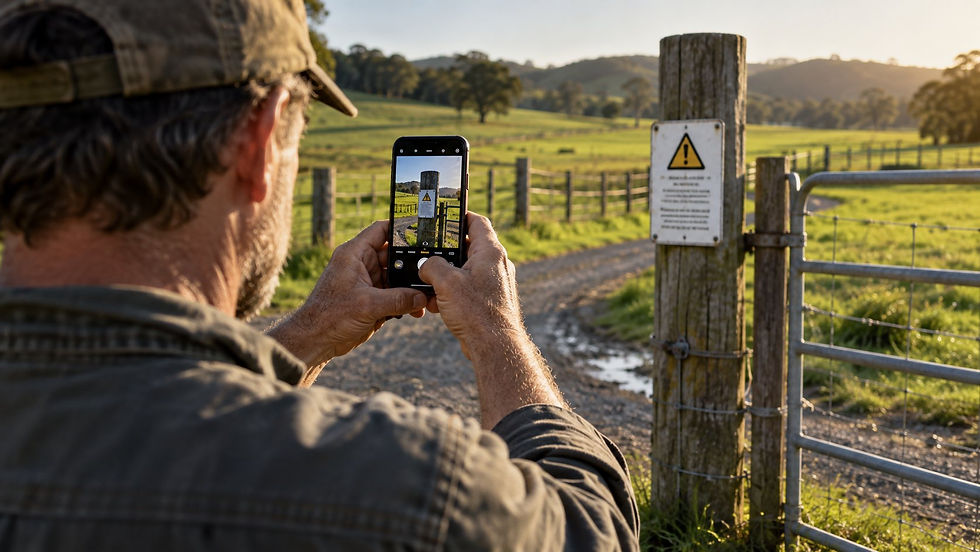
Photograph every sign in place, with a date, at the start of each season. Keep the photos with your training and inspection records.
Walk the farm with your insurance agent once a year, and post separate signs for any specific hazard you know about.
Frequently Asked Questions
How many states have agritourism liability laws?
By our count, 37 states have a statute limiting liability for agritourism injuries as of October 2026, and 13 do not.
What does an agritourism warning sign have to say?
It depends on the state. Thirty states prescribe exact wording, usually beginning with "WARNING" and stating that the operator is not liable for injury or death resulting from the inherent risks of agritourism. Copy the text from your own state's statute.
How big do the letters on the sign have to be?
One inch high in black is the most common rule. North Carolina's code specifies three-quarters of an inch, Pennsylvania requires a sign at least 3 feet by 2 feet, and a handful of states set no size.
Which states require agritourism registration for liability protection?
Kansas, Missouri, Mississippi, North Dakota and Oklahoma tie protection to registration, and Louisiana requires an approved plan of operation.
Does an agritourism law mean I cannot be sued?
No. It gives you a defense for injuries caused by inherent risks. It does not prevent a lawsuit, and it does not cover gross negligence, intentional harm or, in several states, ordinary negligence.
Do I still need liability insurance if my state has an agritourism law?
Yes. The statute is a defense, not a payment. Insurance pays for your lawyer and for any claim the statute does not block.
The Bottom Line
The farmers who get hurt by these laws are rarely the reckless ones. They are the careful ones who assumed. They assumed the sign from the farm store had the right wording. They assumed one sign was enough. They assumed registration was optional paperwork.
Spend one hour this week with your state's statute, a tape measure and a camera. It is the cheapest protection your farm will ever buy.
Important: This guide is general education, not legal advice. Statutes are amended often and courts interpret them differently. Before you rely on any protection described here, read the current statute and speak with an attorney licensed in your state and with your insurance agent.
Sources
National Agricultural Law Center: States' Agritourism Statutes (compilation updated December 18, 2025)
Hall and Bachelor, Agritourism Immunity Laws in the United States (National Agricultural Law Center, 2019)
Richardson and Lashmet, Signage Requirements Under Agritourism Liability Acts (Texas A&M AgriLife, 2026)
USDA Economic Research Service: agritourism income in the 2022 Census of Agriculture
CDC MMWR: Animal Contact Outbreak Surveillance System, 2009 to 2021
National Children's Center: 2022 Childhood Agricultural Injuries Fact Sheet
Farm Credit East: Agritourism Liability Limitations in the Northeast (2025)
University of Maryland: New Maryland Law Limits Liability Waivers
University of Minnesota Extension: Understanding Agritourism Liability in Minnesota


Comments