



You Might Be Ready for Agritourism If Strangers Keep Stopping at Your Gate: 21 Signs Your Farm Is Ready for Paying Visitors (and 5 Signs to Wait)

Every summer, Ted Grinter had the same problem.
His family has farmed the same Kansas land since 1947, and Ted has grown sunflowers for birdseed for nearly 50 years. But whenever the field bloomed, cars pulled over. Strangers walked in to take pictures. Some walked out with flower heads.
About 30 years ago, Ted was fed up. His wife, Kris, had another idea. Put a donation box by the field, she said, and see what happens.
Today Grinter Farms still charges no admission. Visitors are asked to leave a $1 donation per flower head on the honor system, and they shop in the family's Sunflower General Store. They come by the thousands, from the U.S. and as far away as Europe, Asia, Australia and New Zealand. After their daughter talked them into putting the bloom on Facebook, the crowds grew. On Labor Day weekend in 2016, visitors, holiday traffic and road construction backed up the highway, and the farm closed for the day on the sheriff's office's advice.
Same field. Same crop. What changed was how the family saw the strangers at the gate.
You've probably heard the old "you might be a farmer if..." jokes, a spin on Jeff Foxworthy's famous "you might be a redneck if..." routine. This is the agritourism version, with one difference: every sign is backed by real farms, university research and hard numbers.
So, is your farm ready for agritourism? If several of these 21 signs sound like your place, you may be closer to visitor income than you think. And if any of the 5 warning signs near the end sound like you, you'll know exactly what to fix first.
The Short Answer Your farm might be ready for agritourism if people already ask to visit, you're within about an hour of a town or on a road tourists use, someone in your family enjoys hosting, you can give visitors a toilet, parking and a safe route, your insurer has said yes in writing, and you'd rather test one small paid activity than borrow money to build. Below are 21 signs in six areas, 5 signs that say "wait," and a 30-day test. Count your ticks, fix your weakest area first, then take the free Farm Readiness Quiz for a score in each area. |

Why "Ready" Matters More Than "Interested"
Plenty of farmers are interested in agritourism. Far fewer are ready for it, and the census shows what that gap costs.
In 2022, 28,617 U.S. farms earned money from agritourism and recreation. Together they took in $1.26 billion, up 12.4% from 2017 after inflation. That's about 1.5% of all American farms.
But the money wasn't shared evenly. Not even close.

Nearly half of those farms (47.7%) took in less than $5,000 for the whole year. Meanwhile, the 23% of farms that took in $25,000 or more collected about 91% of all the money, roughly $173,000 each on average.
What separates the two groups? The research points to things you can check before you open: what you sell on the farm, whether you run events, how long you stick with it, and whether you treat it as a business. A national survey of 1,834 agritourism farms found that operators who made "increase revenue" a goal earned more, and that farms offering sales on the farm tended to earn more, while those that also sold off the farm tended to earn less. I break all of that down in Is Agritourism Profitable? and in my agritourism statistics guide.
The 21 signs below are built from those findings, from a dozen university "is agritourism right for you?" checklists, and from what I've seen on my own durian farm. They're grouped into the six areas the Farm Readiness Quiz scores.

Area 1: Location & Access
Sign No. 1: You might be ready if strangers already stop at your gate
In 1976, a Japanese National Railways calendar featured the lavender fields at Farm Tomita in Nakafurano, Hokkaido. The timing was brutal: cheap imports and synthetic scents had sent lavender oil prices falling, and many growers were giving up. Once the calendar appeared, amateur photographers began arriving from every corner of Japan. The farm changed course, from producing perfume oil to welcoming sightseers. Entry is still free; visitors spend their money in the farm's shops and cafés instead.
Near Australia's Great Ocean Road, Dianne Benson noticed something similar at the family dairy at Cooriemungle: lots of visitors were coming just to watch the cows being milked. With grain prices rising and milk prices falling, she and her husband Julian started making cheese. Apostle Whey Cheese opened in 2005. Twenty years later it's a major tourist stop on the Great Ocean Road.
When people slow down, take photos or knock to ask "do you sell these?", the market is telling you something. A study by USDA economists found that farms already letting the public use their land for recreation, such as walking trails, hunting or fishing, had about 11 times the odds of offering agritourism. That was the strongest link of any yes-or-no factor they tested. People who already like being on your land are a head start.
Field-Tested Play: For the next 30 days, keep a notebook by the door. Write down every person who stops, calls or messages to ask about visiting or buying. Twenty names in a month is a market. Two is a hobby. |
Sign No. 2: You're within about an hour of a town or city, or on a road tourists already use
USDA's Economic Research Service found that farms near cities tend to make more from agritourism, and that scenery and nearby outdoor recreation help too. In Penn State's 2024 national survey, 91.3% of the agritourism operations that gave a location were in or next to a metro county.
Visitors will travel, but not forever. In a Florida Farm Bureau consumer survey, people said they'd drive 30 minutes to an hour to visit a farm and stay one to two hours.
Far from town? You're not out. You just need a bigger reason to come. The University of Vermont's 2026 national study found farms offering overnight stays had about five times the odds of drawing a bigger share of visitors from 50 miles or more away. Read how transport and accessibility affect agritourism before you decide distance is a deal-breaker.
Sign No. 3: People can find you, and park when they arrive
If a stranger types your farm's name into Google Maps, does it come up? Can they drive in without getting stuck? Is there a flat spot for ten cars that isn't next to your machinery?
The University of Vermont's readiness checklist asks about road signs, an address that works in mapping apps and parking. Michigan State University Extension's list includes parking and restrooms too. It sounds dull. It's also the first thing a visitor judges.
Area 2: Story & Experiences
Sign No. 4: You can't stop talking about what you grow
Hirokazu Matsumoto was the youngest person to pass Japan's first tea instructor exam, in 2001. He and his partners at Kyoto Obubu Tea Farms had no brand, no sales channels and no way to outsell the established tea shops, so they looked for a new way. In 2010 they ran their first tour for about 20 people. In 2023, more than 2,000 people joined their tours in Wazuka, a small town more than 10 km from the nearest train station. Today their four-hour tour of the fields and factory, with nine teas and lunch, costs from ¥19,800 per person.
That passion is a product. Visitors don't pay to look at a field. They pay to stand next to someone who loves it and hear why.
Sign No. 5: Your farm has a moment the city can't give
Picking fruit off the tree. Bottle-feeding a lamb. Tasting honey straight from the comb. Sitting in the shade when the durians drop.
Ask yourself: what happens on my farm that people can't get anywhere else? Family time and scenery top the list. In a study of 969 Missouri households, 86.8% rated time with family an important reason to visit a farm, and 89.2% said the same about scenic views. Pick-your-own was the most popular farm activity.
Sign No. 6: Your family story makes people lean in
Fifth generation on the same land. A grandmother's recipe. The year the flood nearly took everything. People connect with people, then with the farm.
If you've never written your story down, start with why sharing your farm story is essential.
Sign No. 7: Friends already ask, "Can we bring the kids?"
Josef Buttigieg bought land at Lumsden, about ten minutes north of Regina in Saskatchewan, in 2017. A year later he started showing his daughter's friends around, just for fun. They went home and told their friends. Then strangers began asking to visit. Fenek Farms now welcomes hundreds of people a week for tours, with more than 300 animals, school tours, children's farm camps and a mobile petting zoo.
When friends of friends start asking to visit, and teachers ask about class trips, you're past the "will anyone come?" question. In the Florida survey, 75% of consumers said activities for children were important, and 86% said they were more likely to visit for a special or seasonal event.
Field-Tested Play: Next time someone asks to bring their kids, say yes, and charge a fair price. After she started selling at farmers' markets, California beekeeper Helene Marshall kept showing curious people around her honey operation, and the tours ate into her working time. Around 1999 she started charging a $100 minimum for a group of up to 20. By 2009 a private group tour cost $400. As she put it, farmers often forget to put a value on their time. My guide to the farm experiences schools happily pay for shows you what to offer. |
Area 3: People & Time
Sign No. 8: You genuinely enjoy people, even the 50th question of the day
Most university checklists put this near the top, ahead of land or money. Rutgers asks whether you enjoy entertaining guests and whether you like crowds. NC State asks whether you'll enjoy being around and responsible for a large number of people, including children.
The good news: most operators do. In the University of Vermont's national survey, 80% of agritourism operators said enjoying social interaction with the public was an important goal. In separate in-depth interviews with 23 operators, more than half named excellent customer service as a key to their success.
Sign No. 9: Someone in the family wants to run the visitor side
Narelle Zanker worked as a teacher for four years, including teaching agriculture, before coming home to her parents' dairy farm near Mannum, South Australia, in 2022. Her husband, Joel, saw the potential: the farm is about an hour from Adelaide. In May 2024 they started a Dairy Adventures social media page, posted regularly, and bookings soon followed. Visitors bottle-feed calves, watch the milking and hear farm stories, and the couple estimate about 90% of their guests had never been on a dairy farm before. Insurance was one of their biggest hurdles. They had to prove they could work safely with children and animals. Her advice to other farmers at the 2026 Australian Dairy Conference: "Give it a go, you have nothing to lose."
You don't have to be the host. Many farms work because one person runs the farm and another runs the guests. Older farmers and farm kids can both shine here: see why visitors will pay to learn from a 60-year-old farmer and why farm kids make the best tour guides.
Sign No. 10: You can block out the time, and protect it
Visitors come on weekends, evenings and holidays, exactly when farm families want to rest. That's why time is one of the challenges operators rate highest.
In the University of Vermont's national survey of 1,834 farms, 90% said time management was a challenge and 89% said the same of labor. A 2024 study of New York and Connecticut operators found about 30% worked 60 or more hours a week, and 54% were not fully staffed.
Sign No. 11: Helpers can cover the chores while you host
You can't feed the cattle and guide a school group at the same time. If you have a farm worker, a teenager or a retired parent who can keep the farm running on visitor days, you're ready for more than most. Can part-time farmers succeed in agritourism? shows how others split the load.
Reality Check: Burnout is the quiet killer of farm visitor businesses. After 27 years of pumpkins and family fun, Ackerman Family Farms in Morton, Illinois, closed to the public after its 2025 season, citing labor costs; John Ackerman had worked five 100-hour weeks in a row. Agree on closed days before you open, not after your first exhausting season. My guide to running a profitable agritourism business without burning out shows you how. |
Area 4: Facilities & Safety
Sign No. 12: You have a barn, shed or patch of land doing nothing
Dwight and Shelly Mayer run an eighth-generation Wisconsin dairy with 60 cows. They asked themselves how to make the business pay without growing in size. Their answer was Folk Song Farm, a 48-acre property whose 1853 barn they had restored by Amish woodcrafters. By 2020 it was hosting weddings, company events, ice cream socials and farm-to-table dinners for up to 320 guests, almost every weekend from mid-May to late October.
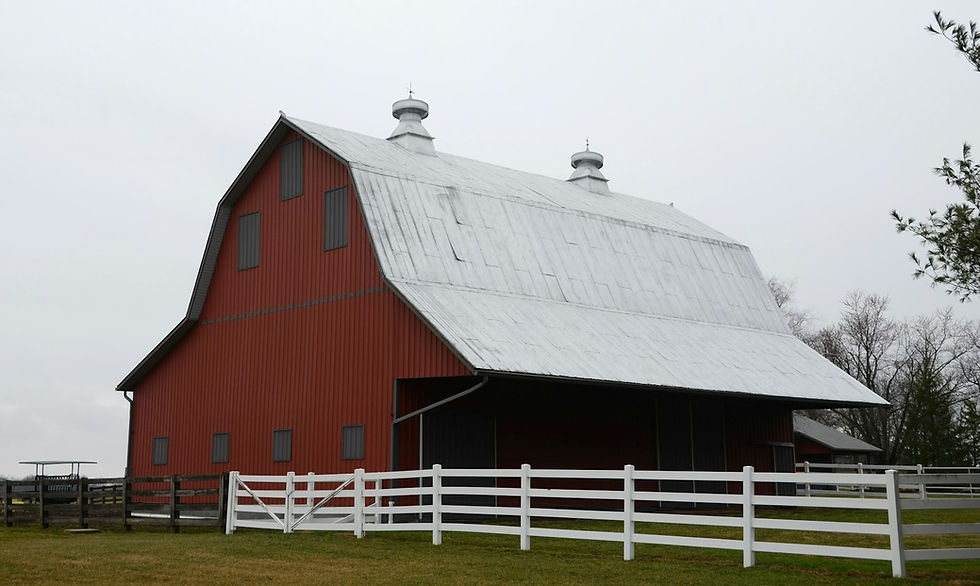
Before you plan anything new, look at what you already own. See how to launch agritourism using only the infrastructure you already own and the old barns earning millions.
One warning from Michigan State University Extension: an uninspected farm building used for public events can be treated as a commercial use. Check whether your barn is legal for visitors first.
Sign No. 13: You can offer a toilet, a place to wash hands and parking
Rutgers' self-assessment asks it bluntly: do you have adequate facilities, including bathrooms and parking? You don't need a new building. For a small first test day, a clean portable toilet and a handwashing station may be all you need, but check your local rules.
Sign No. 14: You can keep visitors away from what could hurt them
Machinery, chemicals, ponds, electric fences, bulls. Walk your farm the way a curious five-year-old would.
This isn't paperwork for its own sake. In 2009, an E. coli outbreak linked to Godstone Farm, an open farm in Surrey, England, infected 93 people, 76 of them children under 10. The independent review found the farm's plan relied mainly on handwashing, while parents said the taps were hard for small children to use and most sinks had only cold water.
Many operators still skip the basics. In Penn State's 2024 national survey, which heard from 2,139 operators, 57.2% of those who answered posted warning signs, 35.7% used safety checklists and 23.7% used none of the safety practices listed. Start with these 10 common agritourism safety hazards.
Area 5: Rules & Insurance
These three signs matter most. Get them wrong and the other 18 don't count. What follows is general information, not legal or insurance advice, so treat each point as a question to ask a professional.
Sign No. 15: You've asked your insurer, "Am I covered for paying visitors?"
The University of California's agritourism guide asks one simple question: have you discussed your agritourism plans with your insurance company? Many farmers haven't. In Penn State's 2024 survey, 17.8% of operators who answered had no liability insurance covering agritourism, and another 11.7% weren't sure.
Insurance is also the challenge operators rate hardest. In the University of Vermont's 2026 national study, cost and availability of insurance got more "very challenging" ratings than anything else.
Questions to ask your insurer:
Does my farm policy cover paying visitors, or only farming?
Does it cover the activity I plan (a hayride, a farm stay, animal contact, food)?
What limit do you recommend, and do I need a separate agritourism policy?
What do you need from me in writing: waivers, signs, a safety plan?
Sign No. 16: You know what your local rules allow
Zoning, building codes, food permits and visitor laws vary by country, state and council. In the U.S., many states have agritourism liability laws, but some only protect you if you post the right warning sign. Penn State found 60.7% of operators weren't sure whether their state even had one.
Questions to ask your planning or zoning office: Is agritourism allowed on my land? Do I need a permit for events, parking or food? Do my buildings need inspection before the public uses them? U.S. readers can start with agritourism laws by state and whether liability waivers protect your farm.
Sign No. 17: Your neighbors are on your side
Visitors bring cars, noise and dust down a shared road. In Penn State's survey, 10.7% of operators had disputes with neighbors over noise, smells or traffic. In New Hampshire, three neighboring households challenged Vernon Family Farm's concerts and food service, then sued the farm and the town in 2024. Even before the lawsuit, the family said three years of legal fights with town boards had left the farm about $70,000 in debt. Talk to your neighbors before your first event, not after their first complaint. Here's how disputes with neighbors can affect agritourism.
Area 6: Money & Marketing
Sign No. 18: You already sell direct
A farm stand, a market stall, a Facebook page, a WhatsApp list of regular buyers. If people already buy straight from you, you already have customers who trust you, and a list to invite.

There's a catch worth knowing. The national survey found that offering sales on the farm was linked to higher agritourism profit, while also selling off the farm, at places like farmers' markets, was linked to lower profit. Your market customers are the bridge: invite them home.
Sign No. 19: You're tired of being a price-taker
In 2024, American farmers received just 11.8 cents of every dollar spent on domestically produced food. When a family picks fruit on your farm and buys a jar of jam on the way out, you collect the whole dollar.
If crop prices are what's pushing you, read crop prices falling? how farms are using agritourism to fill the gap.
Sign No. 20: Your phone is full of farm photos you never post
Sunrise over the orchard. The new calves. Your kids in the harvest. That's free marketing sitting in your pocket. In the 2026 University of Vermont study, social media (87%) and word of mouth (85%) were the top marketing tools operators used. Yet 43% didn't collect any visitor information at all.
Sign No. 21: You'd rather test small than borrow big
In 2010, Sylvia Ganier put one sign at the front of her family's farm on River Road, a few miles from downtown Nashville, and called a few friends to come buy produce. More than 500 people turned up that Saturday. Green Door Gourmet grew from there into school tours, a market, pick-your-own berries and weddings, with about 85,000 visitors a year by 2021.
In Wales, new farmers Laura Pollock and Matt Brooks tested a 1.5-acre pick-your-own pumpkin patch in October 2024. They opened 12 days, charged £9 per car and sold pumpkins by weight. Tickets, pumpkins and catering brought in £21,630, with a reported profit of £17,330. The patch is now a permanent part of their farm.
The farms that last tend to "start slow and grow smart," as the University of Tennessee's Center for Profitable Agriculture puts it. A test day costs little. A barn conversion for visitors who never come costs a lot. Read how much it costs to start an agritourism business before you sign anything.
Count Your Ticks: What Your Score Means
Go back through the 21 signs and count the ones that are honestly true today. Not "could be true with a bit of work." True today.

The total matters less than where your gaps are. A farm with 17 ticks and no answer from its insurer is less ready than a farm with 11 ticks and a written yes. Here is the first fix for each area if it came up short. For the wider pros and cons, see Is Agritourism Right for Your Farm? and 13 things to consider before you start.
Area that came up short | What usually goes wrong | First fix this week |
Location & Access | Visitors can't find you or can't park | Claim your Google Business Profile and pick a parking spot for 10 cars |
Story & Experiences | A walk around the farm with nothing to do | Choose one hands-on moment: pick, feed, taste or plant |
People & Time | The farmer hosts alone and burns out | Agree in writing who hosts, who works and which days are closed |
Facilities & Safety | No toilet, no handwashing, hazards in reach | Hire a portable toilet, set up a wash station, rope off machinery |
Rules & Insurance | Opening first and asking later | Call your insurer and your planning or zoning office before you invite anyone |
Money & Marketing | Free visits, no price, no list | Set one price, take bookings, collect every visitor's phone number or email |
5 Signs You're Not Ready Yet (and What to Do About Each)
Some signs say "wait." Waiting isn't failing. It's how you avoid joining the nearly half of agritourism farms that take in less than $5,000 a year.
You need the money next month. Visitor income grows over seasons, not weeks. When Pandurang Taware set up his agritourism business near Baramati, India, in 2005, he advertised and got no calls at first. His first customer didn't arrive until that October. The national survey of 1,834 farms found that operators with more years of agritourism experience tended to report higher profits. If the bank is calling now, fix cash flow first and treat visitors as a longer play.
Your family is against it, or you dread strangers on your land. Agritourism happens in your home, on your weekends. Agree on days, hours and private places first. If nobody wants to host, choose a low-contact model such as a self-serve farm stand.
You can't control how many people turn up. In July 2018, Bogle Seeds in Ontario opened its sunflower field for photos at $7.50 per adult. On one Saturday the owner estimated 7,000 people came, and about 1,000 didn't pay. Crops were trampled, police stepped in to manage traffic on the highway, and the family said it had no plans to open the field for photos again. Timed tickets, a booking cap and a parking plan come before the Facebook post.
Your insurer said no, and you plan to open anyway. Don't. Look for a specialist agritourism insurer first. I explain what to do in Can't Find Agritourism Insurance?
Your plan starts with a big loan. If the first step is building a barn, a café or cabins, you're betting before you know anyone will come. Test first with what you already own.
Reality Check: The national survey of agritourism farms found that the total number of visitors had no significant link to profit. Busy is not the same as profitable. A full car park of free visitors is a cost, not a business. |
The Signs on My Own Durian Farm
Bloopy Durians is in Bentong, Malaysia. We started the farm slightly after covid. Our durian seasons are short: roughly December to February and June to August, about four or five months a year in total.
Looking back, several of the signs on this list showed up on our farm.
People were already looking for us. Durian lovers search Google for where to eat Musang King, and our farm comes up at the top for that search. That's signs No. 1 and No. 3 at work: people wanting to come, and being able to find us.
We already sold direct. We built a WhatsApp list of loyal customers who buy whenever durians are in season. That list is a reliable source of income. Sign No. 18.
Groups asked to come. Taylor's University and TAR UMT each sent a busload of students, and a FELDA company group visited too. When groups ask, you're past the "will anyone come?" stage. Sign No. 7.
We had helpers and space. Three farm workers, chickens, geese, ducks and fish, a brick farmhouse, and room for customers to pitch tents. Signs No. 11 and No. 12.
We also supplied durians for a Mayor of Kuala Lumpur tourism event, and Kuala Lumpur City Hall gave our team a plaque of appreciation. Today the farm gets up to 100 visitors a week during durian season. Seeing tourists come from everywhere is why I started AgritourismSuccess.com: to help other farmers do the same. If you'd like one example of turning what you have into a paid experience, read how a 4WD adventure ride brought revenue to my durian farm.
Should You Open Your Gate This Season? A 2-Minute Decision
If you're still unsure, walk through this flowchart. Notice what it doesn't ask: how many acres you have, or how much money you can borrow.

The 30-Day Test Before You Invest Big
The fastest way to find out if you're ready is to run one small, honest test. Not a grand opening. A test.

Week 1: Ask. Call your insurer and your local planning or zoning office. Sit down with your family and agree who does what on test day.
Week 2: Prepare. Pick one activity you can run with what you already own: a farm walk with a tasting, a pick-your-own hour, a feeding session. Walk the farm looking for hazards and fix them. Set one price.
Week 3: Invite. Message 20 people you already know. Post five real photos. If you aren't on Google Maps yet, get your farm on Google Maps now; it's free.
Week 4: Host and count. Run the day. Count the money, the hours and the costs. Then ask every guest three questions: What did you enjoy most? What would you pay for next time? Who would you bring?
If you want the shortest possible version of this, my 60-minute MVP test shows you how to try agritourism in a single hour. And if you're worried about cost, read You Don't Need $100,000 to Start Agritourism.
Field-Tested Play: Price your test day like a real business, even if it's friends. Free visits teach you nothing about demand. A fair price teaches you everything, and the research suggests visitors are less price-sensitive than most farmers fear. |
Frequently Asked Questions
How do I know if my farm is ready for agritourism?
Look for signs in six areas: location and access, story and experiences, people and time, facilities and safety, rules and insurance, and money and marketing. If people already ask to visit, someone in your family wants to host, your insurer has said yes and you can test one simple activity without borrowing money, you're close. The free Farm Readiness Quiz scores each area for you.
What is the biggest sign a farm is NOT ready for visitors?
No answer from your insurer. Many standard farm policies were written for farming, not for paying guests. Until your insurer or a specialist agritourism insurer confirms in writing that visitors are covered, don't open, however ready everything else looks.
Do I need a big farm to start agritourism?
No. In the 2022 U.S. Census of Agriculture, farms under 10 acres more than doubled their agritourism income from 2017, to $89 million. What matters more is a reason to visit, a safe place to host and someone who enjoys people.
How far from a city should my farm be?
Closer usually means more visitors. USDA research links higher agritourism income to farms in more populated counties and to areas rich in natural amenities, such as attractive scenery and outdoor recreation. Farms far from town can still succeed, but they need a bigger reason to make the trip, such as an overnight stay.
How much money do I need to start?
Less than most people think, if you test first. Start with one activity using what you already own, charge a fair price and only invest in buildings once real customers have paid you. See my guide to startup costs by activity before you spend.
Is agritourism worth it if I hate dealing with people?
It can be, if someone else hosts. Many successful farms split the work: one person runs the farm, another runs the visitors. If nobody in your family enjoys hosting, choose a low-contact model such as a self-serve farm stand or a quiet farm stay.
What should I do first if I score low?
Fix the area with the lowest score first, starting with insurance and local rules. Then improve how people find you and what they'll do when they arrive. Take the Farm Readiness Quiz to see which area to work on.
Your Next Step
Reading a list of signs won't change your farm. Ticking them off will.
Take the free Farm Readiness Quiz. It takes a few minutes, scores your farm in the same six areas you just read about and tells you what to fix first.
Then grab the free 21-Point Agritourism Blueprint, a checklist for helping visitors find your farm, deciding what to offer them and earning more from every visit.
P.S. Remember Ted Grinter, fed up with strangers in his sunflowers? The strangers never changed. His family's answer did. If people are already slowing down at your gate, take the free Farm Readiness Quiz today and find out which of your six areas to fix first.
Stephen Loke of AgritourismSuccess.com, whose farm is featured in Bloomberg News and Asahi Shimbun. This article is general information, not legal, insurance or tax advice. Rules differ by country, state and council, so check with qualified local advisers before you open your farm to visitors.
Sources
USDA NASS, 2022 Census of Agriculture, U.S. Table 7: Income From Farm-Related Sources
USDA ERS, Chart of Note: Number of U.S. farms falls below 2 million (February 2024)
Penn State NERCRD, 2024 National Agritourism Producer Survey (2025)
University of Vermont, Agritourism Across the United States: Findings from a National Study (2026)
University of Vermont, Agritourism and On-Farm Direct Sales Survey: Results for the U.S. (2021)
Rutgers Cooperative Extension, Is an Agritourism Venture Right for Your Farm? (FS1131)
NC State Extension, Qualifying and Quantifying Your Personal Agritourism Potential
University of Tennessee Center for Profitable Agriculture, CPA Info 227
Connolly et al., Challenges Facing Agritourism: How Are Producers Coping?, Choices (2024)
USDA ERS, Food Dollar Series: farm share of the food dollar, 2024
Lawrence Journal-World, Grinter Farms sunflower fields (2025)
Nippon.com, In Summer, the Hills of Furano Turn Lavender (2019)
The Standard, Apostle Whey Cheese: a farming transformation (2025)
Global Japanese Tea Association, Japanese Tea Innovators: Obubu (2024)
UC Small Farm Program, AgTour Connections newsletter (Marshall's Honey, September 2009)
Stock and Land, South Australian farmer transforms dairy into adventure (2026)
Farm Progress, Couple diversify dairy farm to add next generation (Folk Song Farm, 2020)
NH Business Review, Newfields family farm and town sued by neighbors (2024)
NH Business Review, Vernon Family Farm legal fees (August 2024)
Edible Nashville, Green Days: Sylvia Ganier, Green Door Gourmet (2017)
The Western Producer, Farm tours offer learning experience (2015)
Farming Connect, Pumpkin growers trial sunflowers to extend PYO season (2025)
The Better India, Pandurang Taware and agritourism in Maharashtra (2022)
CTV News, Farm closes after sunflower selfie seekers swarm field (2018)
Vancouver Sun (Postmedia), Bogle Seeds sunflower crowds (August 2018)
Photos: Unsplash (Land O'Lakes, Inc.; Roger Starnes Sr; Judy Beth Morris), Unsplash License


Comments